Permanent residence Portugal status is the milestone most people skip straight past on their way from a temporary permit to a passport. Most people planning a life in Portugal think about two milestones: getting a residence permit, and eventually getting a passport. A real, separate milestone sits between the two and gets almost no coverage. It is where the Portuguese language requirement actually first shows up, years before the citizenship process most people associate it with.
That milestone is permanent residence, reachable once you have held a valid temporary permit for five years, whether that permit was a D7, a work visa, family reunification, or several routes stitched together. And the detail almost everyone gets wrong: the A2 Portuguese permanent residence requirement, which the law words as basic Portuguese, applies first, not only at naturalisation.
Permanent Residence Portugal: What Five Years Actually Means
The route that got you to Portugal does not matter for this milestone. Five years under a D7, which we have covered in detail separately, counts the same as five years under a work permit, a D2 for entrepreneurs, family reunification, or any combination of legal temporary permits, provided none of them lapsed.
That condition is not a formality. The law asks for a temporary permit held for at least five years (Article 80(1)(a) of Law 23/2007) and does not say what a gap does, so a lapsed permit puts the count at risk. Absences matter too: under Article 85(2)(a), AIMA can cancel a temporary permit if its holder is absent without good reason for more than six consecutive months, or more than eight months in total, during its validity, and a cancelled permit takes the count with it. A D7 holder is under the same rule. Treat every renewal window as load-bearing for everything that comes after it, not just for the permit in front of you.
Article 80 Portugal: The Language Requirement People Think Is New
If you have read anything about Portugal’s 2026 nationality law changes, you may believe the Portuguese language test is a citizenship-only hurdle that arrived this year. It is not, and this is the most useful correction on this topic.
Permanent residence, under Article 80(1)(e) of the immigration law, has required basic Portuguese, which AIMA accepts at A2 level, for far longer than the 2026 citizenship reform has existed. It sits at the five-year mark, well before the seven or ten-year citizenship eligibility we have written about separately. If your plan involves Portuguese at all, you need to start well before your citizenship application, because it is required at the earlier milestone regardless of whether you ever intend to naturalise.
There is a genuine silver lining here. AIMA accepts several kinds of proof for permanent residence: a school certificate, an IEFP or other recognised basic Portuguese course certificate, a CAPLE test certificate, or an A2-or-higher Português Língua de Acolhimento course certificate. AIMA confirms that an A2-or-higher Português Língua de Acolhimento certificate counts for both permanent residence and nationality. If you clear this bar honestly at year five, through whichever route suits you, you will very likely already hold the language element of a later naturalisation file. The 2026 law also asks for proof of knowledge of Portuguese culture, history and national symbols, which is a separate element, so this is one requirement satisfied early rather than the whole of the citizenship test.
Getting your household there is the part that has to happen before any of this timeline starts. See what a move to Portugal would involve.
The rest of the checklist
Alongside the residence and language conditions, permanent residence asks for a clean record, in the specific sense that you must not have been convicted, during your last five years of residence, of sentences adding up to more than one year in prison. It asks for your tax and social security position to be regularised, with proof from the tax authority and social security. It asks for proof of accommodation: your own declaration of the address and how you live there, backed by a land-registry certificate if you own the home, or by a declaration from the landlord or host if you rent or are lodged. And it asks for proof of means of subsistence, which has a defined yardstick.
The means-of-subsistence test is numerical, and it is the same one the D7 uses. Article 80(1)(c) of Law 23/2007 sends it to the means-of-subsistence ordinance, and Article 8(1) of Portaria n.º 1563/2007 requires means determined under Article 2(1) and (2), assured for at least twelve months. That means the guaranteed minimum monthly wage, taken net of social security contributions, counted at 100% for the first adult, 50% for each further adult and 30% for each child. For 2026 the wage is €920, which is €818.80 net of the 11% employee contribution. Our D7 article explains why we plan against the gross figure. AIMA’s checklist asks only for proof of means of subsistence and states no figure, so ask AIMA which one it applies to your file.
AIMA Permanent Residence: Not the Citizenship Office
Permanent residence is a separate application from your ordinary permit renewal, but it stays within AIMA, the same agency that handles your temporary permit. This is different from what comes later. Naturalisation is the actual citizenship application, open at seven or ten years of legal residence depending on your nationality. It moves to the registry service, the Instituto dos Registos e do Notariado, where the Conservatória dos Registos Centrais handles nationality files, and we have covered that process in the citizenship article. Permanent residence does not touch that service at all.
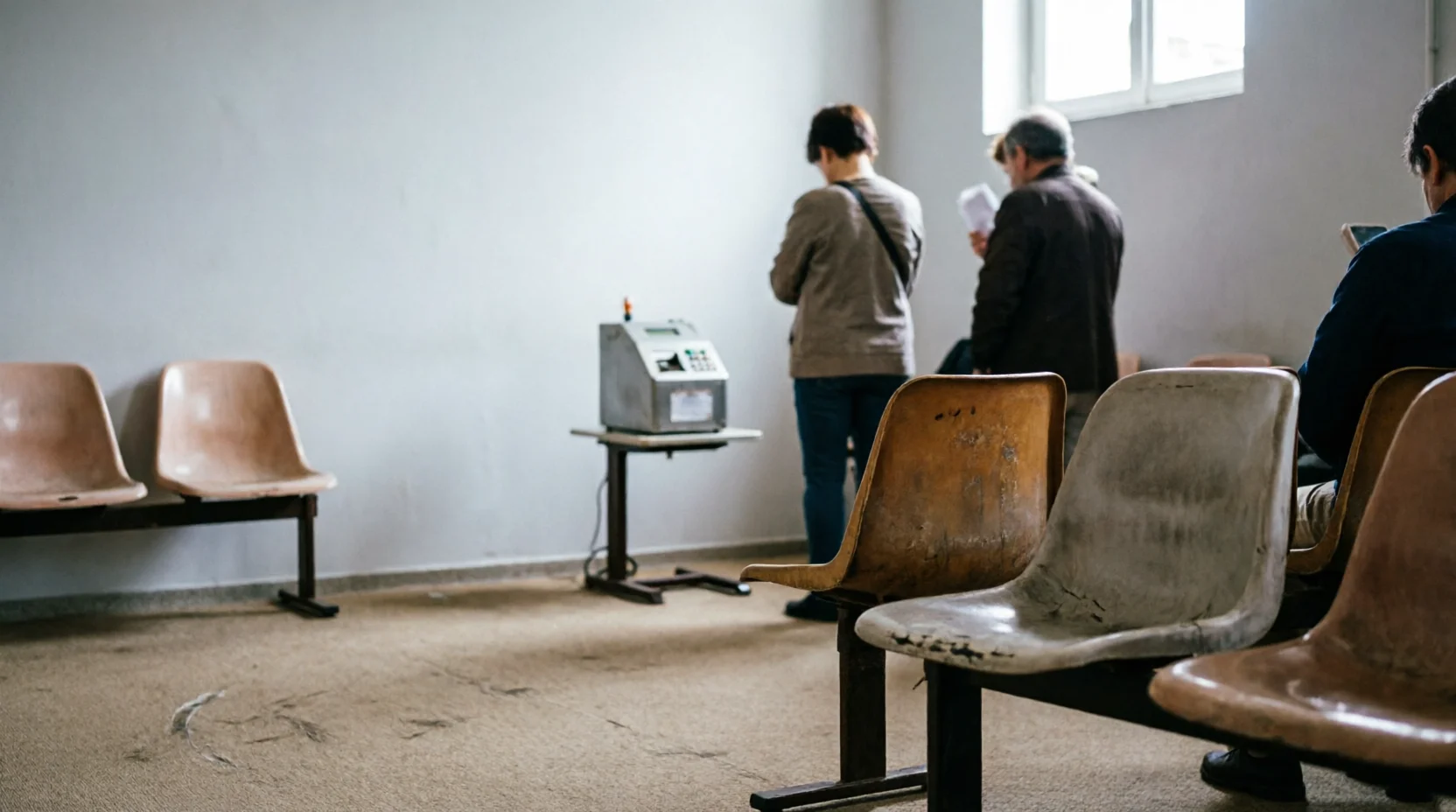
Processing has two stages worth planning around separately. The application is made in person, by appointment, at an AIMA shop (Loja AIMA), so the first thing to check is how soon an appointment is available near you. Once a complete application is submitted, the law gives AIMA 90 days to decide a residence permit application, extendable by 30 days in exceptional circumstances (Article 82(5) of Law 23/2007). Treat that as the legal deadline rather than a promise of how long your file will take; AIMA’s own processing pace has moved substantially over the past two years and is worth checking against current reporting before you build a timeline.
The three checkpoints, in order
It helps to see the whole shape of this rather than treat each stage as a separate mystery.
At five years, provided your permits have not lapsed, you become eligible for permanent residence, which requires basic Portuguese, in practice A2, for the first time. At seven years for EU and CPLP nationals, or ten for everyone else, you become eligible to apply for naturalisation, a separate process at a separate office, where an A2-or-higher certificate also counts as proof of the language element. The 2026 law added proof of Portuguese culture and history on top, and the nationality regulation was due to be amended to implement it, so check its current text when you apply. Citizenship itself follows once naturalisation is granted, on a timeline that is not reliably published and should be treated as a genuine unknown rather than assumed.
Seen this way, permanent residence is not a waypoint to rush past on the way to a passport. It is where the real integration requirements actually begin, and it changes your day-to-day status meaningfully in its own right. Getting the language element right at this stage removes it as a concern for the citizenship file that follows.
What actually changes once you have it
Permanent residence Portugal status is worth pursuing for reasons beyond ticking off a milestone on the way to citizenship. Once granted, you stop being on a renewal cycle that depends on re-proving income, accommodation, and presence every two or three years. The permit has no expiry date, and the card is renewed every five years, with a criminal-record check rather than a fresh income and accommodation file (Article 76 of Law 23/2007; Article 65 of Decreto Regulamentar 84/2007). Absence limits still exist but are much longer: AIMA can cancel a permanent permit if its holder is away without good reason for 24 consecutive months, or for 30 months in a three-year period (Article 85(2)(b)). For a D7 holder, that replaces the six- and eight-month limits that governed your first years. You have moved from a status that has to keep proving itself to one that, in practice, mostly just needs maintaining.
It also gives you a more stable foundation for anything that depends on long-term certainty: a mortgage application, a long lease, a business registration, or simply not having to explain your immigration status every time you deal with a Portuguese institution. None of this is citizenship, and it does not give you a Portuguese passport. But it is the point at which Portugal stops being a country you are conditionally allowed to live in and becomes, in most practical respects, the country you live in.
The mistake that can reset the clock
The five years are counted as a holder of a temporary residence permit, and that is worth being careful about. Time spent in Portugal before you actually held a valid permit does not count, however long you had been planning the move or however many prior visits you made. The clock starts when your legal residence starts, not when you first arrived or first applied.
The more common mistake is letting a permit lapse near the end of a renewal cycle, often because a renewal application was filed late or a required document arrived after the deadline. The law does not say what a gap does to the five-year count, so the safe assumption is that a permit that lapses and has to be reapplied for, rather than renewed, can break it. If that happens in year four, the practical effect can be starting the count over rather than losing a few weeks. A renewal has to be requested at least 30 days before the permit expires (Article 78(1) of Law 23/2007), and a late request is an administrative offence with a fine of €75 to €300 (Article 201), so treat the date 30 days before expiry as your deadline, not the date on the card. A lawyer licensed in Portugal can tell you how AIMA treats a gap in your specific case.
If citizenship itself, rather than just permanent residence, is the eventual goal, we have covered what naturalisation asks for once you are eligible separately.
Related reading: More on moving to Portugal
Frequently asked questions
Do I need to speak Portuguese for permanent residence?
Yes. Article 80 of Law 23/2007 requires basic Portuguese for permanent residence, which you can apply for after five years with a temporary permit, and AIMA accepts an A2-or-higher certificate as proof, alongside a school certificate, an approved basic Portuguese course certificate or a CAPLE test certificate. This is separate from, and earlier than, the language requirement for citizenship, which applies at seven or ten years of legal residence depending on nationality.
How is permanent residence different from citizenship?
Permanent residence Portugal status is reached at five years and is handled by AIMA, the same authority as your temporary permit. Citizenship requires seven or ten years of legal residence in total, depending on nationality, and is then a separate application handled by the registry service (IRN), where the Conservatória dos Registos Centrais deals with nationality files, not by AIMA.
Does my D7, work visa, or other permit count toward permanent residence?
Yes. Article 80 asks for a temporary residence permit held for at least five years and does not distinguish between routes, so a D7, a work permit or family reunification all count. The law does not say what a lapse in between does to the count, so treat a gap as a risk.
How much income do I need for permanent residence?
The same yardstick as the D7. Article 8(1) of Portaria n.º 1563/2007 requires means determined under Article 2(1) and (2), assured for at least twelve months: the guaranteed minimum monthly wage, net of social security contributions, counted at 100% for the first adult, 50% for each further adult and 30% for each child. For 2026 the wage is €920, or €818.80 net of the 11% employee contribution. AIMA’s checklist asks for proof of means of subsistence without stating a figure, so confirm with AIMA which one it applies. Checked on 9 October 2026.
Working through what the move itself looks like?
Every one of these milestones assumes you actually made the move. Tell us where you are starting from and we will come back with a realistic picture.
Sources
- Diário da República, Lei n.º 23/2007 (consolidated text), Artigos 76.º, 78.º, 80.º, 82.º, 85.º and 201.º: permanent residence, renewal, decision deadlines, absences
- Diário da República, Portaria n.º 1563/2007, Artigos 2.º and 8.º, the means-of-subsistence ordinance
- Diário da República, Decreto Regulamentar n.º 84/2007 (consolidated text), Artigos 64.º and 65.º: permanent residence application and renewal
- AIMA, Autorização de Residência Permanente (Art. 80.º): documents and accepted proof of Portuguese
- AIMA, Aprendizagem de Português como Língua Estrangeira, perguntas frequentes: A2 certificates for permanent residence and nationality
- Diário da República, Lei da Nacionalidade (consolidated text), Artigo 6.º, as amended by Lei Orgânica n.º 1/2026
- Diário da República, Regulamento da Nacionalidade Portuguesa, Artigo 25.º: proof of Portuguese for naturalisation
- Government of Portugal, Pedir a nacionalidade portuguesa (service page)
All sources accessed and re-verified 9 October 2026. Immigration rules, processing times and appointment availability change frequently, and the nationality regulation was due to be updated for the 2026 law. Confirm current requirements and take advice from a professional licensed in Portugal before building a timeline around any figure here.